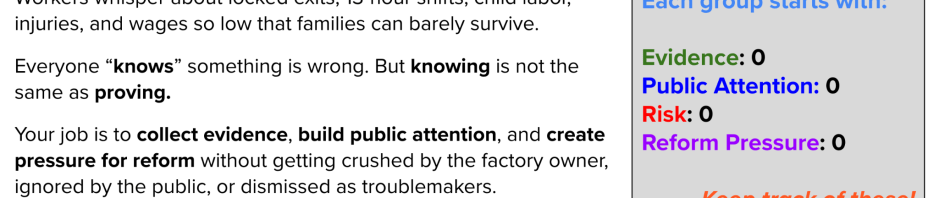
This post reflects on the design of a short classroom simulation introducing students to muckraking during the Progressive Era. Rather than beginning class with a reading, I wanted students to experience the challenges of gathering evidence, building public attention, and creating pressure for reform before researching the work of real muckrakers. This post highlights the activity!
Back in May while prepping for the upcoming week for my US History I class, I realized that I wanted to do a bit more with muckraking, the investigative journalism of the Progressive Era that sought to expose problems and spark reform. I could have just started with a reading, but I wanted students to experience the process before researching individual muckrakers. So I began building a small, game-like activity that could fit into about 20 minutes.
I landed on Investigating the Factory at Ash Street. In the activity, students became groups of concerned citizens in 1905 trying to expose dangerous conditions at a fictional garment factory. Over four rounds, they made choices about how to investigate, where to publish, how to respond to pushback, and what reforms to demand.

At first when designing this, every option simply awarded different point values. But that didn’t feel much like reality. Also, it bored me after a bit. The more I thought about it, the more I realized that the choices should depend on what had happened before. One choice was to publish the findings in a national magazine. But, come on, a national magazine should not publish a major exposé without evidence! A local newspaper, on the other hand, might actually help you gather more evidence because workers in the community recognized the story and came forward.
This led me to make the game a bit more complex. I decided to start tracking:
- Evidence
- Public Attention
- Reform Pressure
- Risk
At this point, planning the game became a helluva lot more fun. I probably also had a few evil laughs along the way. [I don’t know why my laughs sound evil when I am making something but they often do!]
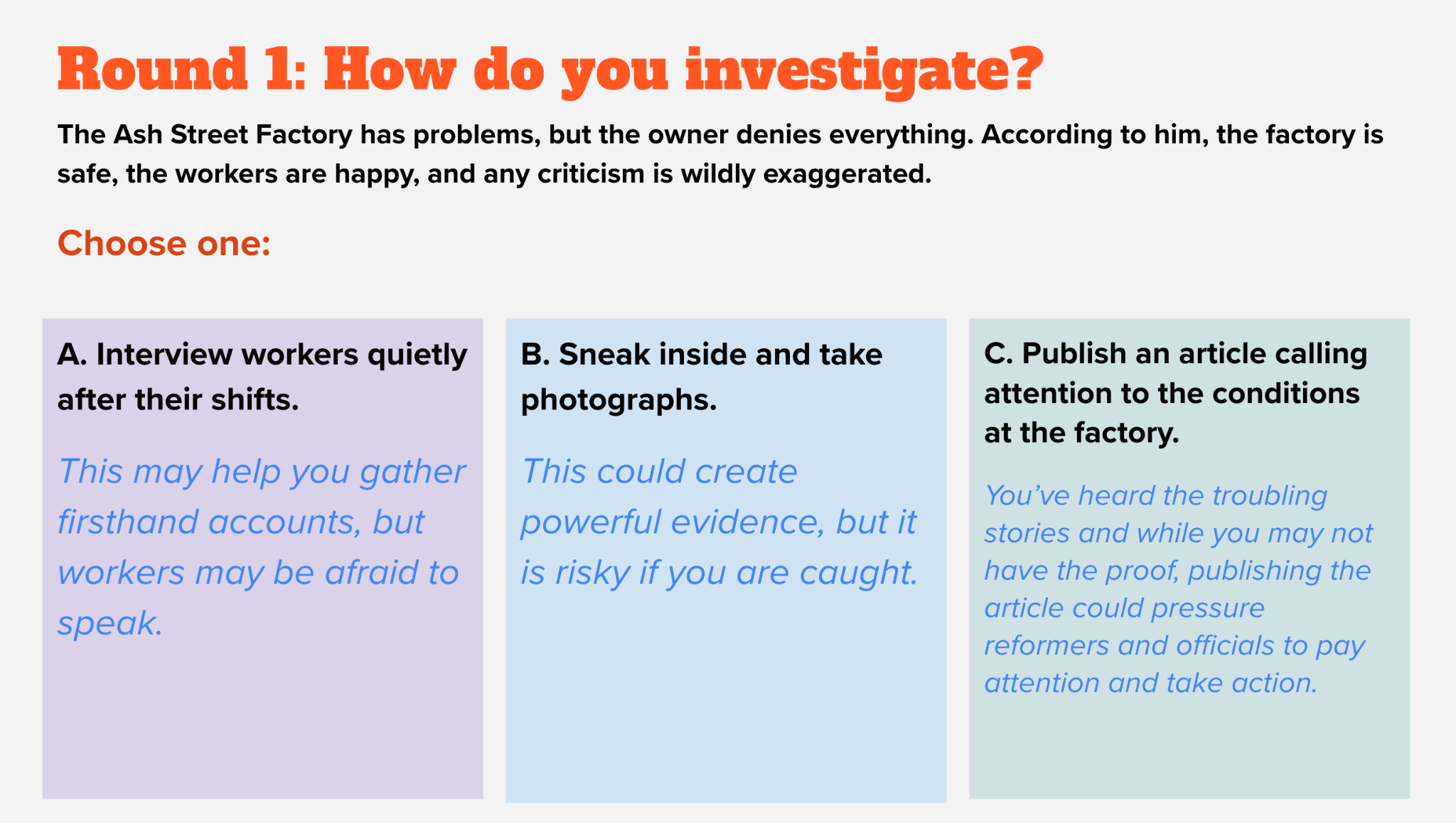
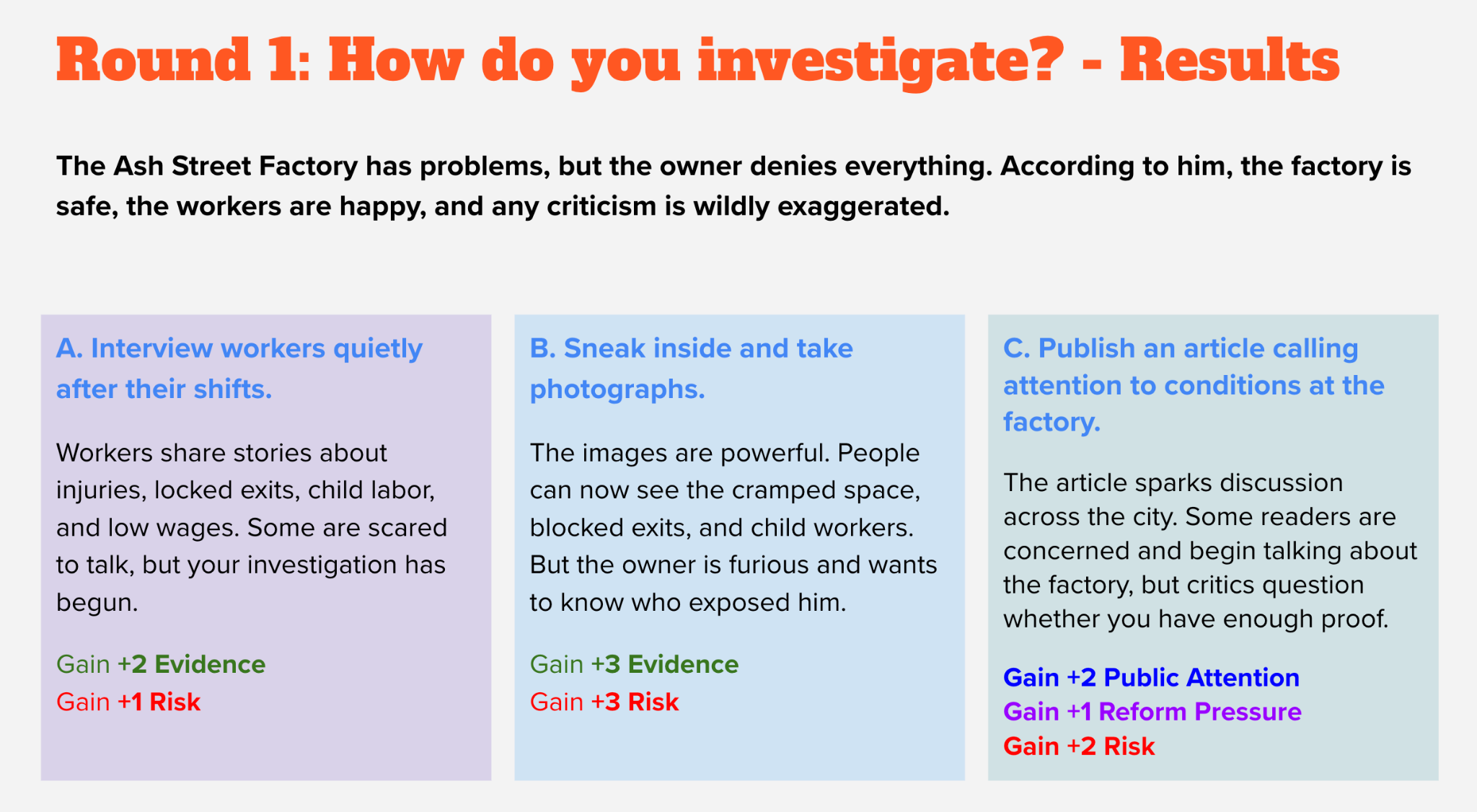
I wanted there to be multiple possible paths through the game. There was no one right way to “win.” I also did not want the perfect ending to be easy. Gathering evidence was not enough by itself. Students also needed people to see it and enough pressure to force officials to act. Some choices created attention but damaged credibility. Others reduced risk without producing meaningful reform.
I played through many different combinations to see whether the scoring worked. Even after using it with students, I continued to tinker. This is not a perfectly balanced Progressive Era journalism simulation. It is a 20ish-minute activity designed to introduce the concept of muckraking. Tinker with it as you’d like! [Presentation: Muckraking: Investigating the Factory at Ash Street, Tracker: Muckraking: Investigating the Factory at Ash Street Scoring Tracker.]
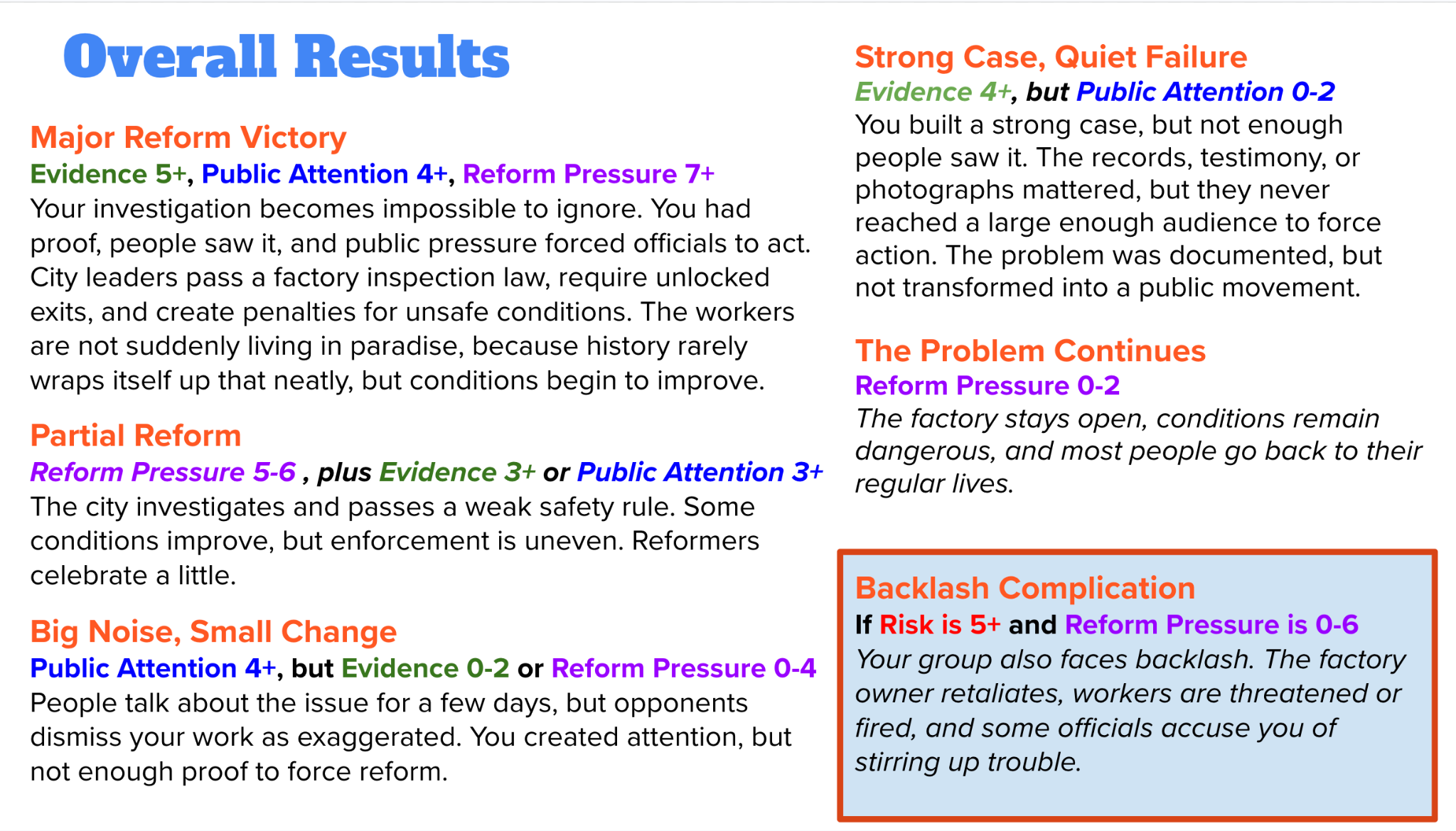
During the game, teams of students debated their choices, reacted to the consequences, and kept close track of their numbers. Afterward, we had a good discussion about what actually mattered. Was evidence most important? Public attention? Political pressure? Could reform happen without all three?
Students then completed a short research activity and created trading cards for Ida Tarbell, Upton Sinclair, Ida B. Wells, Jacob Riis, or Lincoln Steffens. Because they had already worked through the fictional factory investigation, they were prepared to recognize the same elements in the real stories: gathering proof, finding an audience, facing backlash, and trying to create change.
I do not think every historical topic should become a game. Oh goodness, no. Muckraking seemed to have a clear progression built into it, which made me think a game could work. Collect evidence —-> Build attention —> Create pressure —> Push for change.
I was pleased with how the activity turned out because it wasn’t just a reading about muckraking. Students got an overview of the movement while engaging with many of the decisions that muckrakers might have faced. I also enjoyed creating something that highlighted a group of people who gathered evidence, built a case, and used it to push for change – skills I hope my students continue to develop long after they leave my classroom.


 Michael K. Milton: Musings on History & Education (mostly)